
2018 - 6 Issue

Case report

Silent Sinus Syndrome

Full Text links

Summary

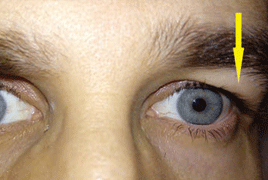
Silent sinus syndrom is rare and slow progressive disorder associated with asymptomatic chronic maxillary sinusitis and collapse of the orbital floor. The most common manifestations are enophtalmos, hypoglobus and pseudoretraction upper eyelid. Silent sinus syndrome is almost a unilateral condition and is usually diagnosed in patients in their 30´s and 40´s. The largest risk factors is underlaying aberrant nasal anatomy. The subsequent osteomeatal complex obstruction leads to hypoventilation of the maxillary sinus and negative pressure development. The sinus cavity is filed with a combination of mucus and acellular transudate. This proces create a chronic mucosal inflammation with demineralization and collapse of the orbital floor. CT imaging is pathognomonic and shows ipsilateral maxilar sinusitis and the orbital floor is inferiorly displaced. The differential diagnosis includes chronic sinusitis, osteomyelitis, malignat sinus infiltration and orbital trauma. The endoscopic antrostomy is the gold standard to re-establish normal sinus aeration. In this article we describe patient with silent sinus syndrome, who has been treated at our clinic and his symptoms were corrected ad integrum after the surgery.

References

  1. Babar-Craigh, H., Kayhanian, H., De Silva DJ.: Spontaneous silent sinus syndrome (imploding antrum syndrome): Case series of 16 patients. Rhinology; 2011, 49(3): 315-317.
  2. Bartley, G.B., MD.: The differential diagnosis and classification of eyelid retraction. Trans Am Ophtalmol soc; 1995, 93: 371-389.
  3. Brandt, MG., Wright, ED.: The silent sinus syndromies a form of chronic maxillary atelectasis: A. Systematic review of all reported caes. Am J Rhinol; 2008, 22(1): 68-73.
  4. Burroughs, JR., Hernandez, Cospin, JR., Soparkar, CN.: Misdiagnosis of silent sinus syndrome. Ophtal Plast Reconstr Surg; 2003, 19(6): 449-454.
  5. Davidson, JK., Soparkar, CN., Williams, JB.: Negative sinus pressure and normal predisease imaging in silent sinus syndrome. Arch Ophtalmol; 1999, 117(12): 1653-1654.
  6. Hunt, SM., Tami, TA.: Sinusitis-induced enophtalmos the si - lent sinus syndrome. Ear Nose Throat J, 79 (8): 576-584.
  7. Kass, ES., Salman, S., Montgomery, WW.: Manometric study of complete ostial occlusion in chronic maxillary atelectasis. Laryngoscope; 1996, 106(10): 1255-1258. CONCLUSION Silent sinus syndrome is a rare pathology caused by progressive and asymptomatic atelectasis of the maxillary sinus. The diagnosis is often determined by an ophthalmologist due to manifestations of enophthalmos, hypoglobus and pseudo-retraction of the upper eyelid. Despite the fact that it is possible to determine the diagnosis only on the basis of the clinical symptoms, MR examination is indicated, which is highly beneficial for demonstrating this pathology. Treatment takes place in co-operation with ENT, and consists in restoration of normal ventilation of the maxillary sinus by endoscopic antrostomy, and if applicable reconstruction of the orbital floor with the aid of implants. The patient referred to in our case report experienced a rapid regression of the clinical symptoms after the operation, without the necess
  8. Levine, SB., Mitra, S.: Maxillary sinus involution after endoscopic sinus surgrey i a child: a case report. AmJ.Rhinol; 2000, 14: 7-11.
  9. Liss, JA., Patel, RD., Stefko, ST.: A case of bilateral silent sinus syndrome presenting with chronic ocular surface disease. Ophthal Plast Reconstruct sur; 2011, 27(6): 158-160.
  10. Numa, WA., Desai, U., Gold, DR.: Silent sinus syndrome: A case presentation and comprehensive review of all 84 reported cases. AnnOtol RhinoLaringol; 2005, 114(9): 688-694.
  11. Montgomery, WW.: Mucocele of the maxillary sinus causing enophtalmos. Eye Ear Nose Throat Mon; 1964, 43: 41-44.
  12. Soparkar, CN., Patrinely, JR., Cuaycong, MH. et al.: The silent sinus syndrome. A cause of spontaneous enoptahlmos. Ophtalmology; 1994, 101(4): 772-778.
  13. Soparkar, CN., Patrinely, JR., Davidson, JK.: Silent sinus syndrome - new perspectives. Ophtalmology; 2004: 111(2): 414- 5, author reply 415-416.
  14. Suh, JD., Ramakrishan, V., Lee, JY.: Bilateral silent sinus syndrome. Ear Nose Throat J, 2012; 91(12): 19-21.